How to Teach Breathwork Safely and Effectively: A Guide for Yoga Teachers
As a yoga teacher you may know that a single pranayama, or breathwork session can shift someone from fight-or-flight to deep calm in minutes. But when

As a yoga teacher you may know that a single pranayama, or breathwork session can shift someone from fight-or-flight to deep calm in minutes. But when it comes to how to teach breathwork safely and effectively, without proper safety protocols, the same techniques that regulate stress and anxiety can accidentally trigger overwhelm, dizziness, or emotional flooding in students. Many yoga teachers learn powerful breathing practices but receive little guidance on contraindications, ratios, or trauma-informed instruction.
Teaching breathwork safely and effectively requires a progressive, choice-centered approach that prioritizes consent and clear boundaries. You'll learn the safety principles, beginner-friendly techniques, and trauma-informed strategies that help teachers guide students confidently. Ready to explore evidence-based breathwork training with mentorship from renowned educators? Discover how Gaja Collective prepares teachers to lead with both authenticity and skill.
Core Principles for Teaching Pranayama Safely in Teacher Training
When you are learning teach pranayama safely in yoga teacher training, you create a foundation that protects both current students and their future practitioners. Three foundational principles help you create breathwork experiences that feel safe and empowering rather than overwhelming, setting the stage for confident, responsible instruction.
Screen and Stay Within Scope
Before introducing any pranayama technique, gather basic health histories through intake forms or brief conversations about respiratory conditions, cardiovascular concerns, pregnancy status, and trauma history. This information helps you adapt practices and recognize when to suggest students refer to their healthcare providers. Remember that Yoga Alliance guidelines emphasize staying within educational scope—teach foundational breathing techniques, not clinical interventions. Your role in a 200-hour program is to support nervous system regulation and competency in teaching skills that students can safely share with their communities.
Start Small and Progress Mindfully
Begin with gentle, short practices lasting 1-3 minutes, using techniques like diaphragmatic breathing or simple breath awareness. The NHS recommends starting with basic exercises before advancing to more complex patterns. Expand duration and intensity only when students report feeling stable and at ease with foundational breathwork instruction. Be sure to include contraindications for more aggressive techniques like Kapalabhati (Shining Skull Breath) and Bhastrika (Bellows Breath) and avoid extended breath retention in foundational training—these require specialized instruction and careful supervision.
Center Consent and Student Agency
Use invitational language that gives students permission to modify or pause at any time. Phrases like "if it's stabilizing for you" and "notice what your body needs" honor individual autonomy. The British Heart Foundation emphasizes clear stop signals and alternatives when discomfort arises. Normalize returning to natural breath as a wise choice, not a failure. This approach, modeled in spaces like Gaja's community gatherings, creates psychological safety where students can explore without pressure or shame.
Beginner-Friendly Techniques and Smart Sequencing
When teaching pranayama techniques for beginners in your yoga teacher training, focus on building a strong foundation before adding complexity. Start with practices that feel accessible and grounding, then gradually introduce techniques that require more coordination or attention.
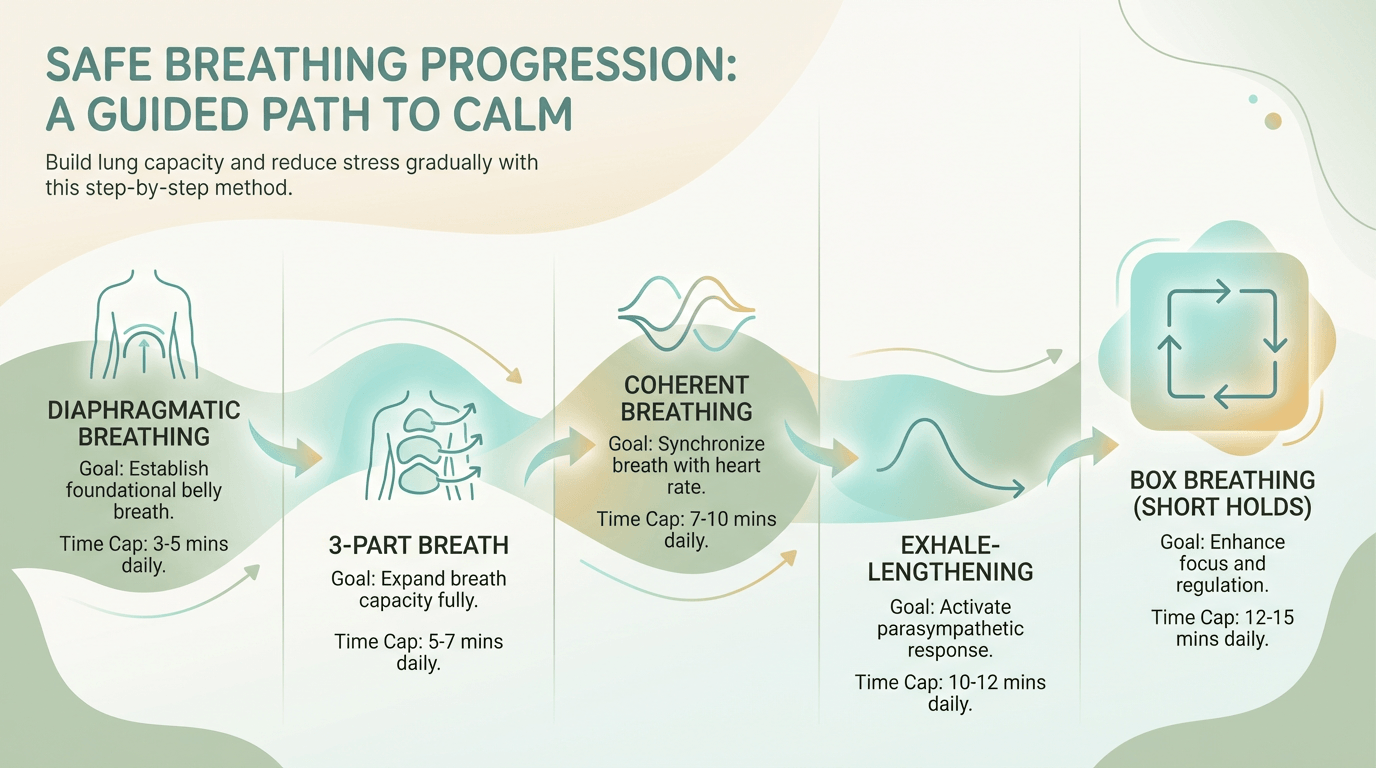
Start with diaphragmatic breath practices and Three-Part Breath - These foundational techniques help trainees connect with their natural rhythm and build body awareness before adding any counting or timing elements.
Give options for breath rations without forcing your students to stay on a specific count. This could strain the nervous system and have an adverse effect on the mind.
Introduce gentle cadence work through coherent breathing - Invite practitioners to breathe at 5-6 breaths per minute (about 5 seconds in, 5 seconds out, or whatever is their maximum lung capacity) to promote nervous system balance without creating strain or effort.
Teach exhale-lengthening for down-regulation - Offer simple ratios like 4 counts in, 6-8 counts out (with options to modify) to activate the body's relaxation response, keeping sessions to 2-3 minutes maximum to prevent overwhelm.
Introduce Box Breathing gradually with short holds - If adding breath retention, start with very brief holds (2-4 counts) and avoid extended retention practices that can trigger anxiety in new practitioners.
Emphasize safety cues and modifications - Always offer nasal breathing when possible, provide seated and side-lying options, and teach trainees to return to natural breath if they experience dizziness, tingling, or anxiety.
Establish clear time boundaries - Keep initial sessions to 1-3 minutes to allow practitioners to build tolerance gradually while you observe their responses—these limits prevent nervous system overwhelm and ensure positive experiences.
Offer clear transitions out of the technique so as not to disrupt the nervous system - Invite practitioners to lower their chin, float their gaze open to a point on the floor, and then bring their gaze back into the room once the cycles have been completed.
Recognize when to refer out - If trainees have respiratory conditions, cardiovascular concerns, or trauma history affecting breath, connect them with qualified healthcare providers before proceeding with advanced techniques.
For structured guidance on teaching these foundational practices, explore resources like Gaja Meditation Foundations, which includes breath-awareness techniques perfect for building your teaching toolkit. The comprehensive 200-Hour Yoga and Breathwork Teacher Training provides supervised practice and mentorship to help you teach these techniques with confidence.
Trauma-Informed and Inclusive Teaching for Breathwork
Trauma-informed breathwork teaching centers on choice and agency, recognizing that many students carry invisible histories that breathing practices might unexpectedly activate. Research on trauma-sensitive yoga shows that offering options like eyes open or closed, seated or side-lying positions, and clear permission to pause creates safety. Use invitational language such as "if it feels right for you" rather than directive commands. Keep practices short with frequent check-ins, and normalize opting out as wisdom rather than weakness.
Beyond creating choice-centered environments, learning to recognize dysregulation signs becomes an important teaching skill. Watch for shallow breathing, distant or unfocused expressions, or sudden stillness that might indicate dissociation. When you notice these signs, gently pause the practice and invite students to orient to the room through their senses. Clinical frameworks emphasize grounding techniques and having clear referral pathways when students need additional support beyond what yoga teacher training provides.
FAQ: Safe, Effective Breathwork in Yoga Teacher Training
Making the leap from personal practice to teaching others can feel overwhelming, especially when it comes to breathwork safety. These questions address the practical concerns and safety protocols that help new teachers build confidence in their instruction.
How should yoga teachers introduce breathwork to students new to breathwork?
Start with simple awareness practices like diaphragmatic breathing for 1-2 minutes maximum. Build familiarity with natural breath observation before adding any techniques. Always offer seated and side-lying options, emphasize nasal breathing, and normalize returning to natural breathing rhythm anytime.
What are the primary concerns when teaching pranayama in teacher training?
The main risks include hyperventilation, triggering trauma responses, and overwhelming the nervous system. Research shows that forceful breathing practices can cause respiratory complications. Avoid aggressive techniques, long breath holds, and rapid breathing patterns during foundational training programs.
Which breathwork techniques work best for 200-hour teacher training programs?
Focus on gentle, regulatory practices: diaphragmatic breathing, three-part breath, and coherent breathing (5-6 breaths per minute), and victorious breath. Add mild exhale lengthening only after students show comfort with basics. Reserve advanced practices for specialized advanced training programs where students have built foundational skills.
How does trauma-informed teaching change breathwork instruction?
Trauma-informed teaching honors each student's autonomy while creating space for safe exploration. Always provide opt-out language, keep eyes-open options available, and watch for signs of dysregulation like shallow breathing or dissociation. Evidence suggests that proper screening and teacher training significantly improve safety outcomes.
When should teachers pause breathwork or seek additional support?
Screen for respiratory conditions, pregnancy, recent surgery, or trauma history before beginning and always share potential contraindications. If students experience dizziness, panic, or emotional overwhelm that persists after returning to natural breath, pause the practice. Teachers should refer to healthcare providers when students report ongoing breathing difficulties or psychological distress.
From Personal Practice to Professional Impact: Next Steps with Gaja Collective
Teaching breathwork safely requires more than personal experience. It demands understanding of nervous system regulation, trauma-informed principles, and progressive sequencing that honors each student's capacity. The techniques covered here represent foundational skills that protect both teacher and student.
Moving from your own practice to guiding others benefits from comprehensive training that bridges ancient wisdom with modern safety protocols. This level of expertise comes from structured programs where research shows that effective breathwork instruction requires proper guidance and implementation to achieve therapeutic benefits while avoiding overwhelm.
Ready to teach pranayama with confidence and skill, Gaja Collective's 200-hour yoga and breathwork teacher training combines evidence-based modules with mentorship from renowned educators, preparing you to guide others safely through their own breathwork journey.