How to Open the Heart Chakra Safely: A Trauma-Informed Guide for Yogis
Key Takeaways How to open the heart chakra safely requires a trauma-informed approach that prioritizes nervous system regulation, self-awareness,

Key Takeaways
- How to open the heart chakra safely requires a trauma-informed approach that prioritizes nervous system regulation, self-awareness, and honoring personal boundaries.
- Gentle, evidence-based yoga and breathwork practices—combined with respect for both ancient wisdom and modern science—allow for gradual and sustainable heart opening without overwhelm.
- Comprehensive training in trauma-informed methods is essential for those wishing to guide others, ensuring that heart-centered work is safe, inclusive, and effective for diverse communities.
Some may believe opening the heart chakra means pushing through emotional walls until something breaks open. Studies reveal this approach can actually overwhelm the nervous system and create more resistance. True heart opening happens when your body feels safe enough to soften naturally. Learning how to open the heart chakra safely requires blending ancient wisdom with modern nervous system science.
You'll discover trauma-informed principles that honor your body's signals, gentle yoga and breathwork practices that invite expansion without force, and clear signs of healthy progress. Whether you're deepening your personal practice or preparing to guide others, Gaja Collective offers the evidence-based training you need to approach heart-centered work with both skill and compassion.

Trauma-Informed Foundations for Safe Heart Chakra Work
Opening the heart chakra, or Anahata in Sanskrit, requires more than good intentions and deep backbends. Trauma-informed heart chakra safety begins with understanding that your nervous system must feel regulated before you invite vulnerability. When we approach heart-centered practices with awareness of how trauma lives in the body, we create space for genuine healing rather than retraumatization.
Your Nervous System Comes First
Before moving into any heart-opening practice, establish a calm, connected state where your nervous system feels safe and grounded. This means grounding your feet, lengthening your exhales, and finding a present-moment anchor like the sensation of your breath or the support of the floor. Studies show that body-aware yoga approaches emphasize choice and interoceptive awareness, allowing practitioners to build regulation skills before deeper emotional work.
Honoring Cultural Roots and Personal History
Once you've established this foundation, remember that Anahata practices come from ancient yogic traditions that deserve respect and understanding. Approach these teachings with humility, recognizing that heart chakra work intersects with personal trauma histories in complex ways. What feels expansive and healing to one person, may feel overwhelming to another. Research demonstrates that mindful approaches honor individual differences while maintaining the integrity of traditional practices.
Reading Your Body's Signals
As you build this awareness, your body offers constant feedback about what feels safe and what doesn't. Chest tightness, shallow breathing, or a sense of disconnection are signals to pause, modify, or return to a neutral position. Build your capacity gently, like tending a garden that needs time to bloom. For instance, if a supported fish pose feels intense, try placing an extra bolster under your back or returning to child's pose. If you notice panic, numbness, or dissociation during safe heart chakra exploration, these are your body's wise signals, offering valuable guidance about your current needs.
Five Safety Principles Before You Begin
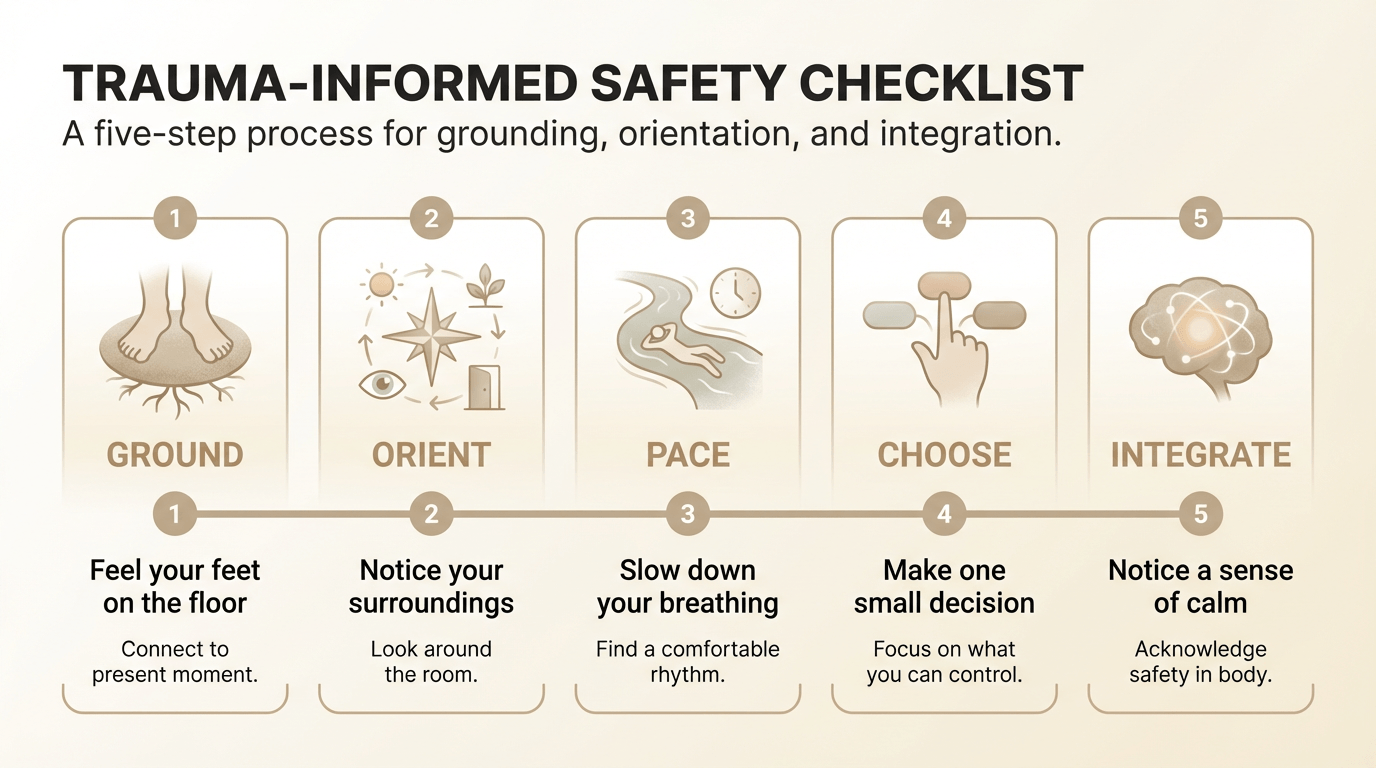
Before exploring gentle heart chakra opening practices for beginners, establishing a foundation of safety allows your nervous system to stay regulated and receptive. Research in Polyvagal Theory shows that physiological safety must come first before we can access states of openness and connection. These five principles create that stable foundation for safe exploration.
Create a stable base - Ground yourself with props like bolsters or blocks and begin with a comfortable, neutral spine rather than immediately moving into deep backbends or chest opening poses.
Monitor your comfort level - Check in with yourself on a scale of 0-10 for intensity, keeping sensations around 3-5 so you stay present and connected rather than overwhelmed.
Pace your breath consciously - Match your breathing to a rhythm that feels steady and sustainable, letting longer exhales calm your nervous system.
Close with integration - End every session with gentle forward folds, child's pose, or simply resting to help your body process and settle the energy you've moved.
Honor your boundaries - Step back or modify immediately if you notice chest tightness, rapid heartbeat, or any sense of disconnection from your body.
These principles align with trauma-informed approaches that prioritize choice and self-regulation. For structured guidance in applying these safely, consider exploring gentle practices like those offered in chakra balancing courses that emphasize nervous system awareness.
A 10-Minute Yoga and Breathwork Sequence on How Open the Heart Chakra Safely
This gentle sequence combines yoga and breathwork for heart chakra opening while keeping you calm and regulated. Research shows that, slow, exhale-focused breathing helps your body relax, creating space for gentle chest opening without overwhelming your system. You'll move through six simple steps that prioritize your comfort and choice at every moment.
Begin with grounding breath (2 minutes): Sit comfortably with your back supported. Practice 1:2 breathing—offering the suggesting to inhale for 4 counts, exhale for 8 counts, or whatever is most comfortable for the practitioner. This calms your body's stress response before any physical opening begins.
Gentle cat-cow with props (2 minutes): Use a blanket under your knees for support. Move slowly between rounding and arching your spine, pausing when your breath feels smooth and steady.
Rest in child's pose (60 seconds): Allow your body to integrate the movement. Notice any sensations in your chest without needing to change them. Offer a blanket under the knees here if they are sensitive. Support under the sit bones with a prop if the seat doesn't reach the heels, and offer a prop under the forehead if it doesn't touch the floor.
Supported fish pose (3 minutes): Place a bolster lengthwise under your shoulder blades. Let your arms rest wide with palms up. If your chin is higher than your forehead or your neck feels strained, add a blanket under your head.
Sphinx pose variation (1 minute): Lie on your belly with forearms down. Lift only as high as keeps your breath calm and jaw soft. Option to widen the arms and bring the elbows forward of the shoulders to modify the pose. Lower immediately if you feel tension building.
Final rest and integration (90 seconds): Return to a neutral position on your back, after hugging your knees in toward your chest. Take several natural breaths and notice how your chest feels now compared to when you started.
Remember, if your breath becomes shallow or your jaw tightens at any point, that's your body asking you to slow down or add more support. This gentle, evidence-based approach builds capacity gradually, honoring both ancient wisdom and modern science in your personal practice.
Heart Chakra Healing FAQs (Safety, Signs, and Next Steps)
Many yogis wonder how to navigate heart-opening practices when past experiences have created protective patterns around vulnerability. These questions address common concerns about how to open the heart chakra safely, healthy progress, and what to do when emotions arise during practice.
How can I open my heart chakra safely if I have past emotional trauma?
Start with centering techniques and shorter sessions. Trauma-informed approaches emphasize choice and pacing over intensity. Use props for support, practice with a qualified instructor, and consider working with a trauma-aware therapist alongside your yoga journey.
What are signs my heart chakra is opening in a healthy way?
Healthy heart chakra opening safely feels gradual and sustainable. You might notice increased compassion for yourself and others, easier emotional expression, or feeling more connected to your values. Physical signs include deeper breathing, relaxed shoulders, and a sense of spaciousness in your chest without forcing.
What if heart-opening practices trigger anxiety, numbness, or overwhelm?
Pause your practice and return to stabilizing exercises. Place your feet on the floor, slow your exhale, or move into child's pose. Research shows that trauma-sensitive yoga reduces anxiety when practitioners honor their limits. Consider shorter practices or working with a trained instructor.
When should I seek additional support for heart chakra healing?
If you experience persistent panic, dissociation (feeling disconnected from your body), or intense emotional reactions during practice, professional support can be helpful. A somatic practitioner (body-based therapist) can provide tools for nervous system regulation. Practitioners often discover that combining therapy with gentle yoga creates the safest path forward.
How can I develop skills to guide others through safe heart chakra opening?
You're ready to deepen your teaching abilities when basic poses feel stable and you can maintain steady breathing throughout gentle sensations. Notice if you can stay present with students' varied responses without pushing through resistance. Consider comprehensive teacher training that includes trauma-informed teaching methods to serve diverse communities safely.
From Personal Practice to Professional Impact
Opening your heart chakra safely requires patience, nervous system awareness, and respect for your body's wisdom. The trauma-informed principles we've explored create a foundation where healing happens naturally, without force or overwhelm. Research shows that trauma-sensitive yoga approaches can effectively support PTSD recovery when taught by properly trained facilitators.
When you've experienced this gentle approach firsthand, you might feel called to guide others on this path. Teaching heart-centered yoga and breathwork benefits from comprehensive training in both traditional philosophy and modern neuroscience-based safety protocols. Creating safe environments where students can explore emotions that arise becomes part of your foundation of knowledge as a trauma-informed instructor.
Ready to learn trauma-informed approaches that honor both ancient wisdom and modern safety protocols? Gaja Collective offers a comprehensive 200-hour Yoga Alliance certified program with specialized yoga teacher training in heart chakra safety, breathwork, and trauma-aware teaching methods guided by renowned educators.