What Are the Yoga Alliance 200 Hour Requirements? A Complete Guide for Aspiring Yoga Teachers
With thousands of yoga schools worldwide holding Yoga Alliance accreditation, many aspiring teachers find it challenging to choose between programs,


With thousands of yoga schools worldwide holding Yoga Alliance accreditation, many aspiring teachers find it challenging to choose between programs, left wondering, what are the Yoga Alliance 200 hour requirements? The key to making an informed choice lies in understanding the foundation. Understanding the official Yoga Alliance 200-hour requirements gives you a clear framework for comparing schools and finding the right fit for your teaching journey.
What are the Yoga Alliance 200 hour requirements? The 200-hour standard covers four core educational categories, required assessments, qualified faculty credentials, and transparent delivery policies. You'll discover the curriculum breakdown, explore what topics you'll study, learn how to choose a program that aligns with your values, and understand your options after graduation.
Discover how Gaja Collective's comprehensive Yoga Teacher Training and Breathwork Certification prepares you for authentic, skillful teaching with Yoga Alliance certification and personalized, evidence-based methodology.

The Official Yoga Alliance 200-Hour Requirements Explained
When you're ready to step into teaching, knowing exactly what your 200-hour training will cover gives you confidence to choose wisely. The Yoga Alliance 200 hour requirements create a strong foundation that supports your growth as a confident teacher while honoring yoga's rich traditions. As you explore your path to teaching, understanding these standards helps you find a program that truly serves your learning style and goals.
Curriculum Structure: Four Core Educational Categories
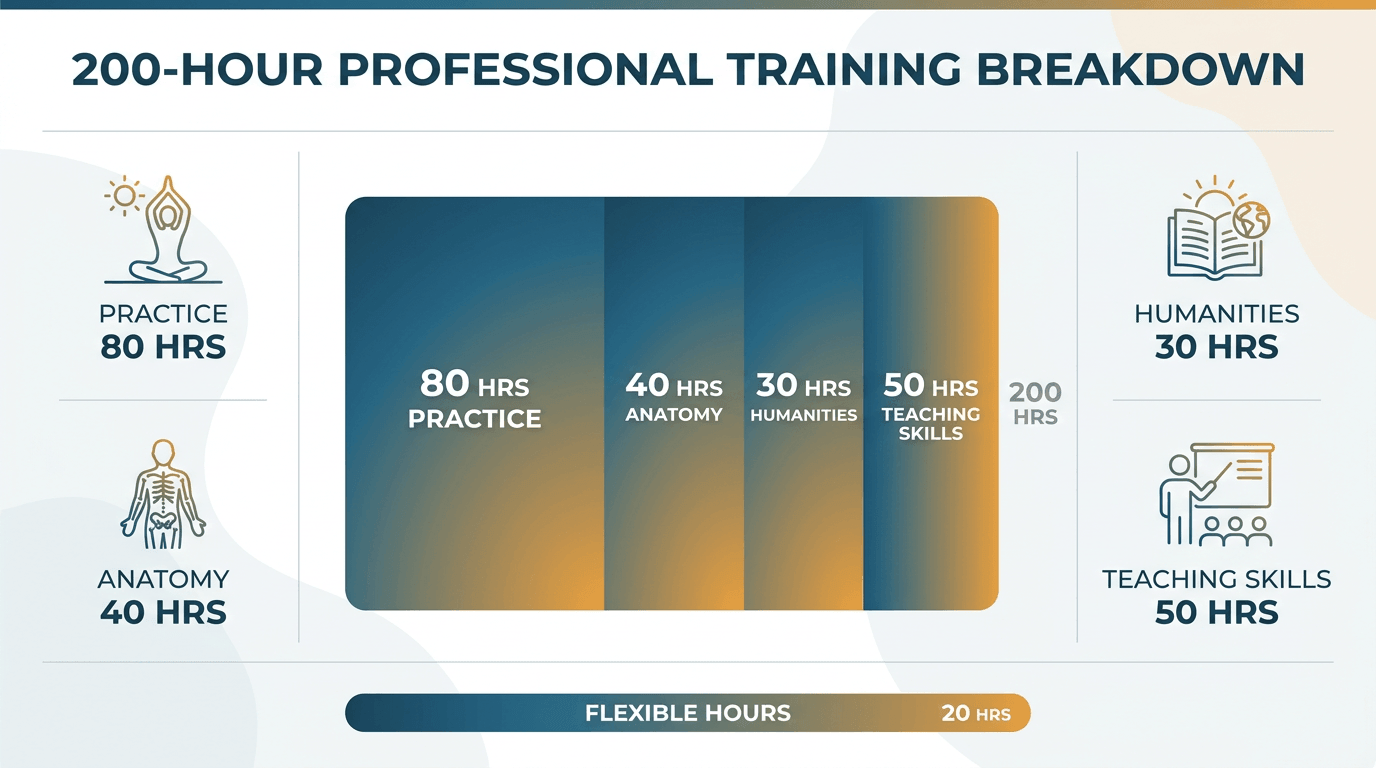
Your 200-hour journey unfolds across four specific educational categories that build comprehensive teaching skills together. Techniques, Training & Practice includes about 75 hours, covering asana, pranayama, meditation, and sequencing that flows naturally. Anatomy & Physiology gets around 30 hours for understanding how bodies move and stay safe in practice. Yoga Humanities also receives about 30 hours, exploring philosophy, history, and ethics that ground your teaching. Professional Essentials rounds out the program with roughly 50 hours focused on teaching methods and creating welcoming spaces for all students. Schools have flexibility in how they use the remaining hours based on their unique focus, supporting your growth every step of the way.
Faculty Qualifications and Assessment Standards
Quality training comes from experienced, credentialed instructors who genuinely care about your development as a teacher. Lead trainers hold appropriate Yoga Alliance credentials, typically E-RYT 500 status, showing they've walked this path with dedication and skill. Programs include observed teaching practice with personalized feedback, creating real learning rather than just lecture-style information. Skill assessments throughout your training show you're ready to teach safely and authentically. These evaluations support your confidence, helping you graduate knowing you have genuine abilities to share yoga with others.
Delivery Formats and Program Policies
Yoga Alliance permits both in-person and approved online formats, recognizing that different learning styles serve different people. Online components can include up to 40 hours of the total training, though hands-on practice and teaching observations typically happen in person where connection deepens. Quality programs provide live, mentored contact hours rather than pre-recorded content alone, fostering real relationships with instructors and fellow students. Schools maintain clear policies about attendance guidelines, makeup work options, and evaluation criteria so you know what to expect. The daily hour limits support sustainable learning pacing, capping instruction at 14 hours per day to honor your need for integration and rest.
What Topics Are Covered in a Yoga Alliance 200-Hour Teacher Training?
What topics are covered in a Yoga Alliance 200 hour teacher training? The curriculum covers four core educational categories that build your knowledge from personal practice to confident teaching. Here's what you'll explore across these areas:
Techniques, Training & Practice (~75 hours) - Learn foundational poses, breathwork, meditation, and sequencing through practice sessions and teaching labs with feedback
Anatomy & Physiology (~30 hours) - Study functional anatomy, injury prevention, nervous system basics, and breath mechanics to adapt practices for different bodies
Yoga Humanities (~30 hours) - Explore yoga history, philosophy, ethics, and cultural sensitivity to teach with respect and authenticity
Professional Essentials (~50 hours) - Develop observation skills, inclusive language, classroom management, and demonstrate competency through practice teaching
The remaining hours allow schools flexibility in their approach and additional topics. These areas follow Yoga Alliance's official standards while giving programs room for specialization. Programs like Gaja's training, integrate evidence-based modules with adaptive practices, ensuring you graduate with both traditional knowledge and modern teaching skills that serve diverse students.
How To Choose the Best Yoga Alliance 200-Hour Program for You
When evaluating programs, look beyond promotional materials to examine the core teaching background and specialized focus areas. Programs that integrate adaptive yoga practices or Ayurveda-informed personalization offer deeper tools for serving diverse students. Pay close attention to how mentorship and feedback are structured—quality programs observe you teaching multiple times and provide specific guidance for improvement. Use the Yoga Alliance directory to verify a school's registration status and review their curriculum approach.
Beyond program content, consider the faculty qualifications and structure that will support your learning style and life circumstances. Look for experienced lead trainers with clear assessment rubrics and programs offering live interaction and mentorship rather than solely self-directed study. Consider practical factors like scheduling flexibility, program duration, and cost that align with your career transition timeline. Schools committed to equity model trauma-aware and inclusive teaching practices while providing ongoing community support and career guidance. The credentialing process requires schools to meet specific standards, so choose programs that transparently demonstrate their commitment to your long-term success.
Chart Your Path With Confidence
Now you have a clear framework for evaluating any program. Compare how schools structure their four-category curriculum, deliver assessments, and provide mentorship depth. Look for experienced lead trainers who offer multiple teaching observations and transparent policies about contact hours and delivery formats.
Once you've made your choice, your Yoga Alliance 200 hour certification next steps begin with completing your training and registration. After graduation, you can teach classes, offer private sessions, and build your professional presence through platforms like professional directories to connect with students who need your unique gifts. The path from personal practice to professional impact starts with one informed decision.
Ready to explore a program that combines Yoga Alliance standards with adaptive, evidence-based training? Gaja Collective offers comprehensive teacher training with expert mentorship and a supportive community to guide your transformation.