Wellness Coach Business Plan Template: Your Step-By-Step Guide to Launching a Purposeful Practice
You've spent years nurturing your own wellness journey through yoga, meditation, and mindful living. Now you feel called to guide others on their path


You've spent years nurturing your own wellness journey through yoga, meditation, and mindful living. Now you feel called to guide others on their path to healing and transformation. The challenge is that turning your passion for well-being into a sustainable coaching practice requires more than compassionate presence and wellness expertise.
A comprehensive wellness coach business plan template bridges the gap between your personal practice and professional impact. This structured approach transforms uncertainty into confident action, helping you create a values-driven business that serves your community while supporting your own growth. You'll explore a step-by-step framework, legal and financial guidance for 2026, measurable goals, and a marketing roadmap designed specifically for wellness coaches.
Ready to build a coaching practice that aligns with your values and creates lasting change? Gaja Collective offers ICF-accredited and NBHWC-approved certification programs that equip you with both the coaching skills and business foundation you need to succeed.

What To Include In A Wellness Coach Business Plan Template
A comprehensive business plan transforms your wellness vision into actionable steps that attract the right clients and build sustainable income. When you know what should be included in a wellness coach business plan template, you create a roadmap that honors both your values and your business goals.
Nine Core Sections That Build Your Foundation
Your plan needs nine interconnected sections that create a complete business framework. Start with mission, vision, and values to anchor your purpose. Define your market and niche to speak directly to those you serve best. Outline your services and pricing to create clear value.
Next, develop your brand and messaging to communicate with genuine connection. Map your marketing and sales to reach people consistently. Design operations and client experience to deliver results. Address legal and compliance to protect your practice. Plan your financials to sustain growth. Set goals and KPIs to measure progress. The Business Kickstarter course provides worksheets for each section.
Anchor Everything In Values And Evidence
Your plan should reflect inclusivity and evidence-based practices from the start. This attracts clients who value integrity and creates partnerships with healthcare providers who trust your approach. When your business foundation aligns with accredited training like the Gaja Coach certification, you build credibility that opens doors. Values-driven planning, rooted in Gaja Collective's mission, also helps you make decisions that feel authentic rather than purely profit-focused.
Treat Your Plan As A Living Document
Your business evolves, and your plan should too. Use version control to track changes and quarterly reviews to adjust course. Start with a 90-day implementation sprint to test your assumptions and gather real feedback. This approach prevents overthinking the details while keeping you responsive to what actually works in your market.

How A Business Plan Helps You Attract Clients And Align With Accreditation
Your coaching skills and certifications open doors, but a thoughtful business plan shows potential clients how you'll support their transformation journey. Understanding how can a wellness coach business plan help attract clients starts with recognizing that your plan becomes a bridge between your expertise and their trust, creating the professional foundation that sets you apart from practitioners who wing it.
Document your scope of practice using NBHWC standards and ICF competencies to clearly define what coaching includes and where you refer out
Build immediate trust by showing clients you understand professional boundaries and operate within established ethical frameworks rather than making it up as you go
Create referral partnerships with therapists, yoga studios, and healthcare providers by clearly defining your niche and outcomes-based approach
Make referrals easy for medical professionals and wellness practitioners who want to recommend you but need confidence in your scope and methods
Design a consistent client experience from initial discovery call through program completion, reducing confusion and increasing conversion rates
Demonstrate ethical standards by incorporating ICF Code of Ethics principles into your client agreements, showing you operate with integrity and professional accountability
Position yourself for sustainable growth with documented processes that make it easier to scale your practice while maintaining quality and consistency
Create Your Plan: A Step-By-Step Business Planning Framework
Creating a business plan for your wellness coaching practice doesn't need to feel overwhelming. A clear roadmap helps you transform your vision into actionable steps that honor both your values and your business goals. When you know how to create a business plan for your wellness coaching practice using a heart-centered framework, you move from uncertainty to confident action in just three months.
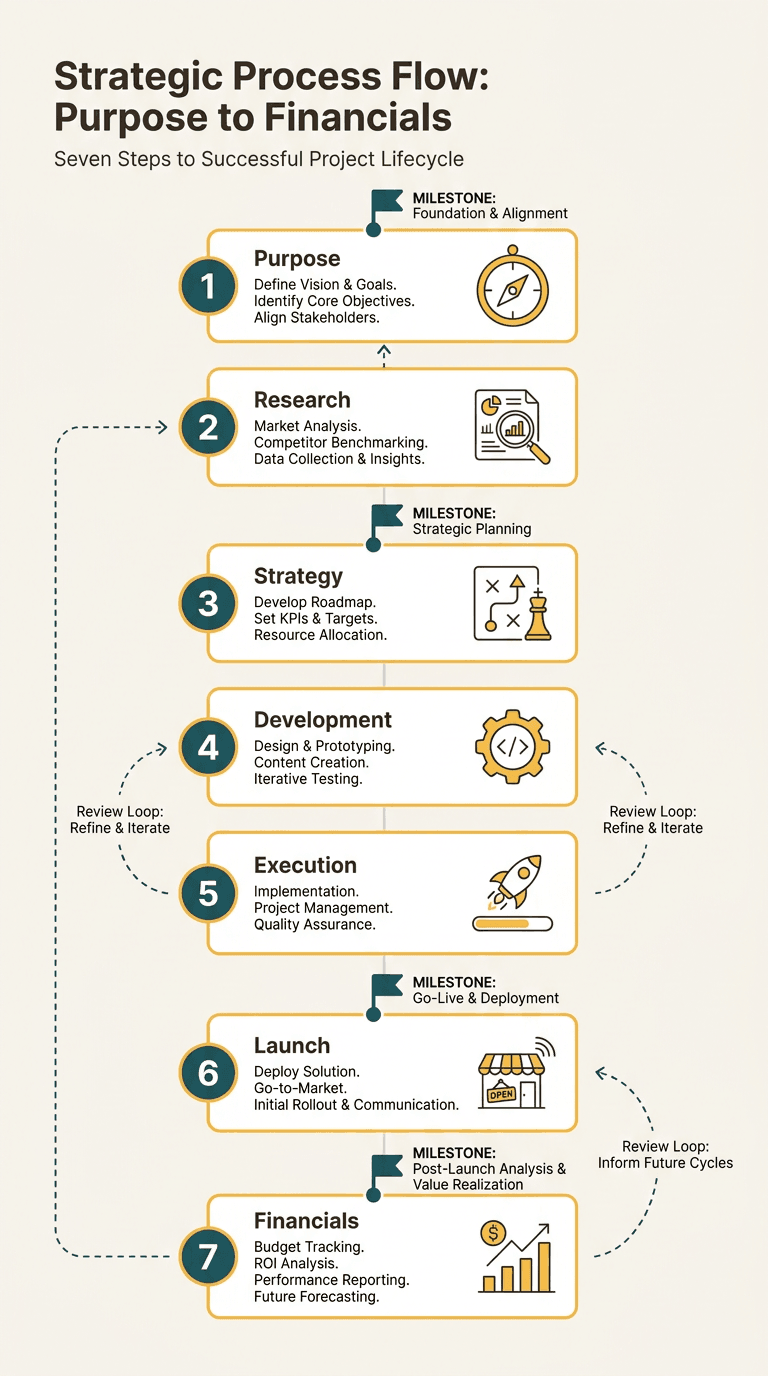
The 7-Step Framework: From Purpose to Profit in Three Months
Your business plan follows seven connected steps designed specifically for wellness professionals who want to build with integrity. Start with Purpose, where you define your mission through the lens of your own healing journey and clarify how your values will guide client relationships. Market research comes next, focusing on understanding the specific challenges your ideal clients face and how mind-body-spirit approaches can serve them. Your Offers section centers on creating signature programs that blend evidence-based coaching with holistic practices. The remaining steps cover Marketing (authentic outreach that builds trust), Operations (client experiences that feel nurturing, not transactional), Legal (protecting both you and your clients), and Financials (sustainable pricing that reflects your worth). The SBA offers free resources including templates and mentorship to support each step. This foundation prepares you for deeper training like Gaja Collective's ICF-accredited certification, which builds on your business plan with professional coaching skills and ongoing mentorship.
Test Your Plan with a Practical 16-Point Checklist
Before launching, strengthen your plan using a practical checklist that ensures each section serves your clients and your sustainability. Purpose requires confirming your mission reflects your lived experience and your values resonate with potential clients. Market testing includes conducting 10 conversations with people in your target audience and reviewing how two established coaches serve similar clients. For Offers, pilot your pricing with three practice clients and define specific outcomes clients can expect. Your Marketing section needs two lead magnets tested for engagement and a quarterly content plan that feels authentic to create. Operations cover your client welcome process and a simple system for gathering feedback. Legal includes a clear scope of practice statement and client agreements that build trust. Financials require a 12-month forecast and a plan for maintaining steady cash flow during your first year. SCORE provides additional support through their free mentoring network, while Gaja's 21-Day Business Kickstarter offers wellness-specific worksheets for each area.
Apply the 56-68-90 Rule for Steady, Meaningful Growth
Build your practice using three key numbers that create sustainable momentum while honoring your energy and values. Complete your initial business plan development in 56 days, leaving over a month for testing and refinement before your launch. Target 68% client retention at the three-month mark, which indicates your programs truly serve people's transformation. Review and update your plan every quarter based on what you've learned from real client interactions and your own growth as a practitioner. This rhythm prevents both rushing to market unprepared and getting stuck in endless planning cycles that delay your impact. Minnesota DEED's business planning resources emphasize this balance between thorough preparation and timely action, particularly important for service-based businesses where relationships drive success.
Setting Goals And Measuring Success: SMART KPIs For Wellness Coaches
When you're wondering how to set goals and measure success in your wellness coaching business plan, start with concrete 3-month targets that honor both business growth and client well-being. Aim for 10 discovery calls monthly, converting 5 into new clients, with a 68% retention rate over three months and client satisfaction scores of 4.6 or higher. These SMART goals create accountability while respecting the trust-building nature of wellness work. Track leading indicators weekly: your outreach volume, content publishing consistency, and show-up rates for consultations, as these predict your client connection flow.
Build a simple dashboard that captures both business sustainability and meaningful client transformation. Monitor revenue, retention rates, and average package value alongside client-reported outcomes like energy levels, stress management, and progress toward personal wellness goals. The NBHWC framework emphasizes competency-based measurement that aligns with your values, while research shows that tracking both process and outcome metrics helps coaches understand their true impact on client well-being. Review these metrics monthly to adjust your approach and celebrate the meaningful changes you're facilitating.
Market Research And Niche: Position Your Practice With Integrity
Finding your coaching niche isn't about chasing trends or copying what others do. The essential steps to start a successful wellness coaching business begin with authentic self-reflection and smart validation. When you ground your practice in your own values and lived experience, you create a foundation that attracts the right clients and sustains your passion over time.
Start With Your Values And Lived Experience
Your most powerful niche emerges where your personal experience meets your passion to help others. Maybe you've navigated corporate burnout, managed chronic stress, or found healing through mindfulness practices. These experiences become your credibility and your authentic foundation. The ICF Global Coaching Study shows that successful coaches often specialize in areas where they have personal insight and genuine passion. Before researching audience demand, spend time reflecting on what transformation you've experienced and what change you feel called to facilitate in others.
Validate Your Niche With Lightweight Research
Once you've identified your authentic niche, validate it before committing fully. Conduct 10 informal interviews with people in your target audience to understand their challenges and language. Complete 2 competitor audits to see how others serve this market and identify gaps. Create two different lead magnets to see which generates better opt-in rates. The SBA's audience research guide offers free tools to estimate market size and demographics. This lightweight approach, similar to what's taught in Gaja Collective's Business Kickstarter course, helps you make informed decisions without investing too much in untested ideas.
Define A Crisp Promise For One Audience
After validation, resist the urge to serve everyone. Instead, craft a clear, specific promise for one well-defined group. For example, "I help corporate professionals manage stress through mindfulness practices" is more compelling than "I help people with wellness." This focused approach makes your marketing more effective and helps potential clients immediately understand if you're right for them. The SCORE methodology suggests documenting your findings and treating research as an ongoing process. Once you've established credibility and client success in one niche, you can strategically expand to serve additional audiences with programs like the Gaja Coach Certification providing the foundation for growth.

Ideal Client Profile, Signature Offers, And Pricing Models
Learning how to define niche and offers for wellness coaching starts with understanding your ideal client and creating focused programs that serve them well. When you know exactly who you serve and how you help them, your marketing and pricing decisions become more authentic and effective.
Build your ideal client profile around outcomes, not demographics to attract people who truly resonate with your approach. Focus on the specific challenges you solve and the lifestyle changes you support rather than broad categories like "busy professionals." This focused direction helps you connect authentically with aligned clients in your marketing.
Start with one signature 12-week program that combines your lived experience with evidence-based outcomes. Research shows that 12-week programs can produce meaningful improvements in health markers, making this timeframe both effective and marketable. Structure weekly or bi-weekly sessions around specific milestones rather than simply scheduling regular check-ins.
Define your scope using professional standards to build trust while staying within your expertise. The ICF Core Competencies and NBHWC standards provide established guidelines for what wellness coaches can address. Bundle holistic approaches like meditation guidance and habit coaching within your expertise, but create a referral network for medical or therapeutic needs.
Create starter, core, and premium packages based on session frequency and program length. Structure these tiers around the depth of support and additional resources rather than discounting for volume. This approach honors the value you provide while giving clients options that fit their needs and investment level.
Test your pricing with three pilot clients before committing to a rate structure. Price according to the transformation and value you provide, not just your time investment. This pilot approach gives you real feedback on what resonates with your market while building confidence in your offerings.
Develop messaging that reflects both results and ethics by highlighting the specific transformations clients can expect while being transparent about your scope and approach. This builds trust with potential clients and sets appropriate expectations from the first conversation.
Legal And Financial Considerations For Wellness Coaches In 2026
Your passion and skills are the heart of your wellness coaching practice, and the right legal and financial foundation helps them flourish. The legal and financial considerations for wellness coaches in 2026 create the supportive structure that protects both you and your clients while enabling sustainable growth. Establishing these elements early creates confidence and protection as you build your purposeful practice.
Topic | Why It Matters | 2026 Action | Tools/Notes |
|---|---|---|---|
Scope of Practice & Disclaimers | Avoids medical claims; sets expectations | Draft clear scope, informed consent, and referral policy | Templates from professional bodies; legal review |
Business Entity (LLC/Sole Prop) | Liability protection, tax treatment | Consult accountant/attorney; file with state | Registered agent; annual fees ($50-300) |
Professional Liability Insurance | Protects against claims | Obtain coach-specific E&O policy | Compare carriers; $200-500/year coverage |
Client Agreements & Policies | Establishes clear boundaries and payment terms | Use e-sign contracts, cancellation and refund terms | E-sign tools; retain for 7 years |
Data Privacy & Security | Protects client data and trust | Adopt HIPAA-like safeguards where relevant; secure files | Encrypted storage; password manager |
Financial Systems & Taxes | Ensures runway and compliance | Open business accounts; bookkeeping; quarterly taxes | Accounting software; tax pro support |
Pricing & Packages | Aligns value and sustainability | Create tiered offers; revisit price quarterly | Pilot pricing with 3 clients |
Budget & Forecast | Maintains healthy cash flow | 12-month forecast; 56-day buffer goal | Spreadsheet or finance app |
Plan 30-60 days for business registration and insurance setup to give yourself adequate time for research and decision-making. When you address legal protections and financial planning early, you can focus your energy on what matters most: supporting your clients' transformation and growth through evidence-based, ethical coaching practices.
Marketing Strategies That Work For New Wellness Coaches
When you're wondering what marketing strategies work best for new wellness coaches, the answer lies in authentic connection over high-pressure sales approaches. Your corporate marketing background gives you valuable skills in messaging and audience understanding that translate beautifully to wellness coaching. The most successful coaches build confidence through demonstrating their expertise and creating meaningful partnerships within their communities, all while maintaining the ethical standards expected by ICF and NBHWC accreditation.
Lead With Value-Driven Content That Demonstrates Your Expertise
Publishing one cornerstone article monthly and hosting one workshop quarterly positions you as a credible resource before clients ever book a session. Your content should address real challenges your ideal clients face, offering practical tools they can implement immediately. This approach builds rapport while showcasing your coaching style and philosophy. Consistent, value-driven content creates a foundation of confidence that converts interested prospects into committed clients who already understand your approach and professional standards.
Create A Simple, Relationship-Centered Outreach Pipeline
Your marketing pipeline works best when it prioritizes genuine connection over volume. Plan for sixteen meaningful touchpoints each week through a mix of personal outreach, follow-ups, and nurturing conversations that lead to discovery calls. Focus on quality interactions where you listen deeply and offer relevant insights. Relationship-driven marketing methods often outperform content-heavy strategies because they align with the personal nature of coaching relationships. Start by reaching out to three local yoga studios this month to explore collaboration opportunities.
Build Partnerships That Leverage Established Networks
Collaborating with yoga studios, corporate employee resource groups, and allied health professionals accelerates your growth through shared credibility within established communities. These partnerships allow you to reach people who already value wellness while being introduced by respected sources. Start by offering free workshops or lunch-and-learns that provide immediate value to their audiences. These relationships often become your most reliable referral sources because they understand your work and can speak authentically about your impact and professional training.

Use This Template To Grow Your Coaching Career
Your business plan template becomes a living roadmap that guides your growth when you commit to consistent action and refinement. The difference between coaches who thrive and those who struggle often comes down to how they implement and adapt their plans over time.
Embrace quarterly sprints with weekly check-ins - Follow a 90-day planning cycle where you set three focus areas, track progress weekly, and adjust your approach based on what you learn from client interactions and market feedback.
Monitor your three growth channels closely - Track metrics for organic content (blog views, social engagement), partnership referrals (yoga studios, wellness centers), and direct referrals from past clients, then invest more time and energy into whichever channel brings you the highest-quality leads.
Test and iterate your messaging every month - Use client feedback, discovery call insights, and conversion rates to refine how you describe your services, adjusting your value proposition until it resonates deeply with your ideal clients.
Build credibility through accredited training and community - Align with ICF-accredited programs that provide ongoing mentorship, peer support, and comprehensive business development resources to strengthen both your practice skills and entrepreneurial confidence.
Create accountability through structured support - Join professional cohorts, find an experienced mentor, or participate in certification programs that include business guidance alongside skill development, ensuring you stay motivated and connected during your career transition.
Wellness Coach Business Plan Template: FAQs
Starting a wellness coaching practice brings up practical questions about boundaries, pricing, and legal requirements. These answers provide clear guidance rooted in professional standards and real-world experience to help you move forward with confidence.
Do I need certification to get clients, and which credentials are most recognized?
While not legally required, certification builds credibility and client trust. ICF-accredited and NBHWC-approved programs like the Gaja Coach Certification provide recognized credentials that differentiate you from uncertified practitioners. Corporate clients and healthcare partners often prefer certified coaches, plus you gain ongoing mentorship and community support.
What's the difference between health coaching and therapy, and how do I stay in scope?
Health coaches focus on goal-setting, behavior change, and wellness education, while therapists diagnose and treat mental health conditions. The NBHWC guidelines show that coaches cannot provide psychotherapy, diagnose disorders, or treat trauma. Always refer clients to licensed mental health professionals when therapeutic needs arise, and maintain clear boundaries in your client agreements.
How much should I charge for a 12-week signature program when starting out?
New coaches commonly charge $1,200-$2,400 for a 12-week program, depending on their location and target market. Start with pilot pricing to test market response, then adjust based on value delivered and client outcomes. Consider your certification level, experience, and local market rates when setting prices.
How do I choose a niche without feeling boxed in?
Start with your lived experience and passions, then validate with potential clients. Choose one specific audience initially (like stressed professionals or new mothers) while keeping your messaging broad enough to evolve. You can always expand your niche as you gain experience and discover new interests.
What KPIs should I track in the first 90 days?
Focus on leading indicators: weekly outreach activities, discovery call bookings, and conversion rates from calls to clients. Track 10 discovery calls monthly, aim for 5 new clients, and monitor client satisfaction scores above 4.6/5. The Business Kickstarter course offers practical guidance on tracking these metrics effectively.
How do I manage client data securely as a solo practitioner?
Use encrypted communication platforms, secure cloud storage with vendor agreements, and password-protected devices. Digital privacy research recommends two-factor authentication and regular data backups. Include clear consent forms explaining digital communication limits, and avoid texting sensitive health information.
What should be in my client contract and consent forms?
Include scope of practice, session policies, cancellation terms, confidentiality limits, and emergency procedures. Clearly state that coaching is not therapy and outline referral protocols. Add payment terms, communication boundaries, and data privacy policies to protect both you and your clients.

Bring Your Plan To Life With Accredited Support
Your business plan becomes the bridge between passion and purpose, transforming uncertainty into structured action that attracts values-aligned clients. When paired with accredited training, your plan creates a foundation for sustainable growth and professional credibility.
Research shows that structured coaching interventions produce measurable client outcomes, but this is why choosing accredited training matters for your success. Accredited programs prepare coaches to deliver consistent, ethical support that builds trust with clients and referral partners.
This is where accredited certification becomes your competitive advantage. The Gaja Coach Certification for wellness coaches combines ICF-accredited and NBHWC-approved curriculum with ongoing mentorship and community support. Graduates gain access to the Gaja Pro directory for client referrals and can join monthly Gather sessions for continued learning and connection with coaches from around the globe.
Your next steps: Download your 16-point business plan checklist, schedule two informational interviews with potential clients this week, and map your first 90-day implementation sprint. Start building your purposeful practice with the support and credibility of Gaja Collective's certification program.