Is Wellness Coaching a Good Second Career? Insights for Midlife Career Changers
As people are generally living longer, we have more time to evolve into careers that we might not have thought about in our 20’s. We now know that


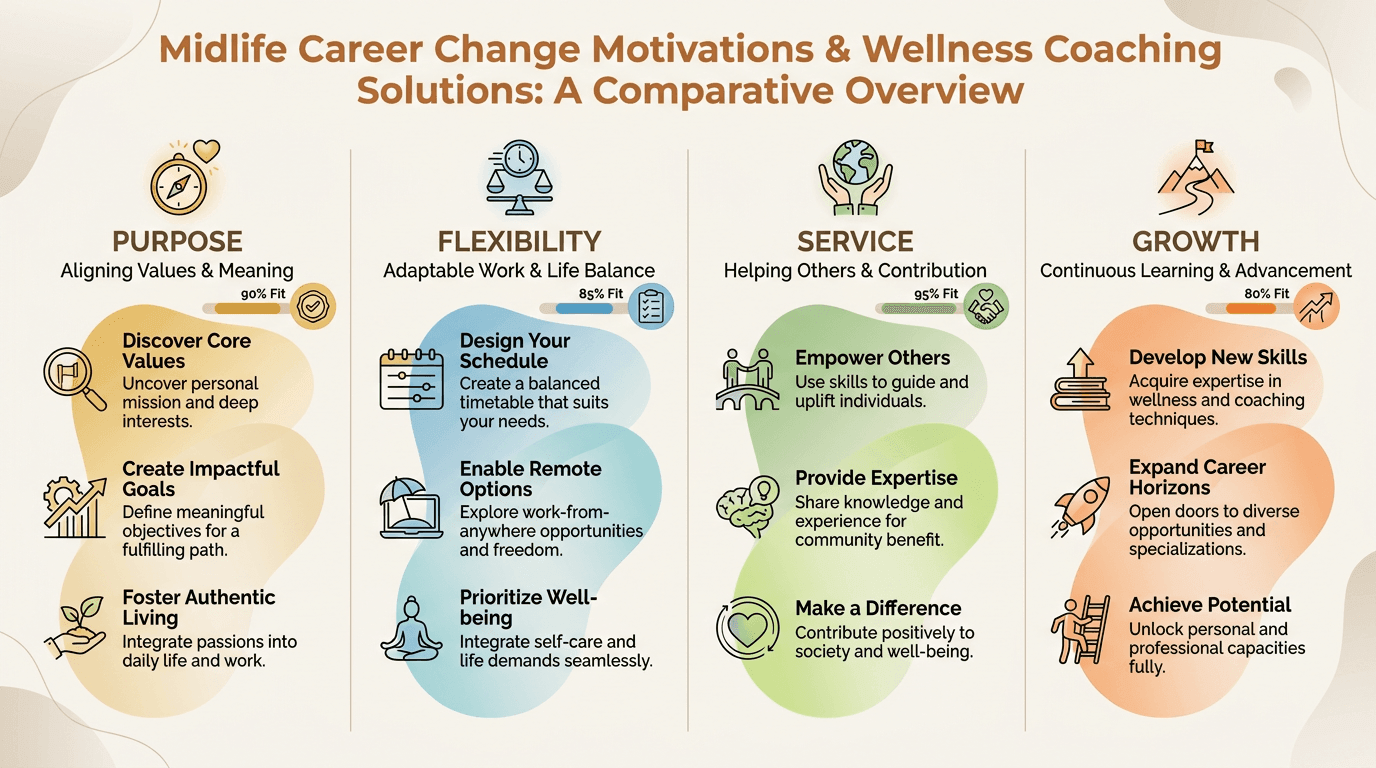
As people are generally living longer, we have more time to evolve into careers that we might not have thought about in our 20’s. We now know that continuing to have meaning and purpose in our lives are some of the best predictors of good health in later years. And with growing costs for just about everything, why not turn that health creating purpose into a way to generate flexible income and utilize our hard-earned compassion, patience, and dare I say wisdom. Many people in their 40s and 50s are not starting over. They are redirecting years of experience toward more meaningful work. If you have been asking whether wellness coaching is a good second career, you’re in good company. The practice of coaching, which was once informal (similar to social work), has become an established profession with recognized standards.
Bodies like the National Board for Health and Wellness Coaching and the International Coaching Federation set clear benchmarks for training and practice. Your existing skills and a recognized credential can work together to build a credible, fulfilling coaching practice. From training requirements to income flexibility, the practical side of this career change is worth understanding. Gaja Collective offers an accredited certification for people ready to turn their passion for well-being into a recognized professional practice.

Why Wellness Coaching Appeals To Midlife Career Changers
For many midlife professionals, the question of whether wellness coaching is a good second career comes down to more than income or logistics. It comes down to fit. And the truth is, the qualities that make someone effective in this work often come with years of real-world experience and hard-won perspective.
Your Life Experience Is a Professional Asset
Midlife career changers often underestimate how much they already bring to coaching. Decades of building relationships, weathering setbacks, and pursuing personal growth develop emotional intelligence that is hard to teach. Coaches who have lived through real challenges tend to meet clients with genuine empathy, not just technique. The International Coaching Federation notes that effective coaching is rooted in trust and human connection, qualities that deepen with experience.
Meaningful Work That Takes Real Skill
Wellness coaching offers something rare: work that feels meaningful and fits around your life. Many coaches build practices that are part-time, remote, or built around existing commitments. But flexibility does not mean unstructured. A Mayo Clinic study found that structured wellness coaching produced lasting improvements in quality of life and stress, with results holding at 24 weeks. That kind of outcome comes from coaches who pair genuine passion with real professional training.
From Personal Practice to Professional Impact
That said, if you already practice yoga, meditation, or other wellness disciplines, you are already ahead in ways that matter. But personal practice and coaching work are different skills. Published research shows that wellness coaching produces sustained behavior change when delivered by certified coaches. The Gaja Coach Certification integrates mind-body-spirit approaches with evidence-based coaching frameworks, so your personal practice becomes part of a formal skill set.
What Skills From Your Current Job Can Help You Become A Wellness Coach?
If you've been asking yourself what skills from your current job can help you become a wellness coach, the answer may surprise you. According to the ICF core competencies, the skills at the heart of professional coaching, including active listening, trust-building, goal-setting, and ethical practice, are ones many professionals have been developing for years without ever calling them coaching.
Client presentations, performance reviews, and patient intake are just a few professional contexts that have already trained you to listen carefully and communicate with intention. These habits are foundational in a coaching relationship.
Empathy and emotional intelligence are competencies the NBHWC content outline recognizes as central to health and wellness coaching. If your career has involved supporting people through change, conflict, or growth, you've already been putting these skills to work.
Strategic thinking and goal-setting translate well from fields like marketing or project leadership. Helping a client map out a path toward a health goal is not so different from building a campaign strategy. The difference is that it centers the person rather than the product.
Boundary-setting and professional ethics are operational strengths that keep a coaching practice grounded and safe. Knowing your scope of practice and when to refer a client elsewhere are skills covered in trauma-informed facilitation training, and they build directly on the professional discernment you've already developed.
Client follow-through and accountability are what separate a meaningful coaching relationship from a one-time conversation. Professionals with experience managing projects, timelines, or client relationships often find these habits come naturally in a coaching context.
The shift worth making is not starting over. It's redirecting. Whether your background is in healthcare, leadership, or communications, the skills you've spent years refining don't disappear in a career change. They find a new purpose.
What Wellness Coach Training Actually Involves
When people ask how much training they need to start a career in wellness coaching, the honest answer is: it depends on the path you choose. Many career changers feel uncertain about where to begin, which makes sense given how much the options vary, and the standards set by bodies like the National Board for Health and Wellness Coaching make those differences meaningful. Aspiring coaches need grounding in ethics, behavior change, active listening, scope of practice, and practical coaching frameworks, skills that protect clients and build professional credibility.
Credential Type | Program Hours | Experience Hours* | Core Competencies Covered | Career Outcomes |
|---|---|---|---|---|
Informal wellness education | Varies (no standard) | None required | General wellness topics, personal practice | Not eligible for professional credentialing; best suited for personal enrichment |
NBHWC-approved program | 75+ instructional hours | None required for exam | Behavior change, health coaching, ethics, scope of practice | Eligible to sit for the NBC-HWC national board exam |
ICF Level 1 accredited (ACC pathway) | 60+ training hours | 100 hours | Core coaching competencies, active listening, ethics, practical frameworks | Eligible for ICF Associate Certified Coach (ACC) credential |
ICF Level 2 accredited (PCC pathway) | 125+ training hours | 500 hours | Advanced coaching skills, mentor coaching, performance evaluation | Eligible for ICF Professional Certified Coach (PCC) credential |
Gaja Coach Certification (ICF Level 1 + NBHWC approved) | 21 weeks | 100 hours (for ICF ACC) | Behavior change, ethics, active listening, mind-body-spirit frameworks | Eligible for ICF ACC credential and NBC-HWC national board exam |
Experience hours are accumulated after completing your program, through practice with real clients.
Programs that carry ICF accreditation are built around competency-based learning, giving career changers a credible foundation that clients and employers recognize. The Gaja Coach Certification meets both ICF and NBHWC standards in a 21-week format, with a curriculum covering behavior change science, coaching ethics, and mind-body-spirit frameworks.
Explore the full curriculum here.
FAQ: Income, Flexibility, And Starting In The Wellness Industry
Feeling aligned with wellness coaching is one thing. Knowing how the income, scheduling, and credentials actually work is another. Getting clear on the specifics is what turns a strong instinct into a confident decision.
Can wellness coaching provide meaningful work and a flexible income?
Yes, and the evidence supports it. A 2023 peer-reviewed study describes health and wellness coaching as an expanding occupation with growing demand. Coaches can work through wellness studios, corporate programs, or their own private practice. This variety gives you real flexibility in how you structure your work and income.
Do I need to quit my current job before I start training or seeing clients?
Not at all. Many programs are designed for working professionals, with part-time formats that fit around existing schedules. Options range from professional certification courses to more structured academic pathways, giving you the flexibility to choose what fits your life. The Gaja Collective blog offers guidance on building your practice while still employed.
How do ICF and NBHWC credentials affect your career options?
They matter more than many people expect. A 2022 ICF study found that clients are more satisfied and more likely to recommend credentialed coaches. The NBHWC notes that board certification builds trust with employers and healthcare partners. This opens doors to corporate wellness roles and client referrals that informal training alone cannot.
How do I find clients once I'm certified?
Having the right support structure makes a real difference here. Gaja graduates have access to the Gaja Pro directory, a listing that helps potential clients find you by specialty and location. A professional profile, backed by your credential, gives you a strong starting point for attracting clients.

How To Choose Your Next Step With Confidence
Choosing a wellness coach certification for career changers is about more than passion. Look for programs that meet recognized approval standards and pair structured coaching methods with real mentorship. That combination builds the confidence to work with clients responsibly, and the qualifications employers and clients recognize.
The Gaja Coach Certification meets ICF accreditation standards and is NBHWC-approved, so your credential carries weight from day one. It weaves mind-body-spirit frameworks into evidence-based practice, guided by experienced instructors and a community of practitioners on the same path.
Start with a free preview workshop to get a feel for the approach, then explore the full certification program at Gaja Collective.